The Most Inconvenient Midnight Ride in History
The night of April 18, 1775, settled over Boston like a black wool blanket somebody had forgotten to wash. The harbor lay beneath the moon, dark and suspicious, like a cat pretending not to watch a mouse.
Paul Revere stood in the shadows with a spyglass pressed to his eye. The signal would come from the church tower. One lantern if the British marched by land. Two if by sea. Simple. Foolproof.
Suddenly, two lanterns appeared. Paul squinted. Then frowned. “Is that one lantern?” He adjusted the spyglass.
“No. Two.”
The idiot hanging them had placed them so close together that they looked like a married couple sharing a blanket. Paul nearly cursed. “Wonderful. The fate of a rebellion hanging by a thread, and apparently, we’ve hired a turnip to hang lanterns.”
He grabbed his horse and mounted. The animal shot forward like a musket ball fired with a double charge of powder. Down narrow roads he rode. Past sleeping houses. Past barns. Past dogs that immediately decided barking was their patriotic duty.
“The British are coming!” Paul shouted.
Windows lit up. Babies cried. Farmers stumbled into yards wearing nightshirts. The countryside woke up like a kicked anthill.
Several miles later, a second-story window flew open. An old man with wild white hair leaned out. An ear horn protruded from one ear like a brass cannon.
“What in thunderation is all this racket?”
Paul slowed. “The British are coming!”
“What?”
“The British are coming!”
The old man stuck the ear horn farther into his ear. “I said what’s all the hollering?”
“The British!”
“Who?”
“The British Army!”
The old man glared. “Can’t a decent man get any sleep? You’ve got my whole household awake. Even me, and I don’t hear thunder anymore.”
Paul sighed. “Sir, I’m trying to warn everyone.”
“Warn them about what?”
“The British!”
“It’s after midnight!”
“I know!”
“Then why are you riding around yelling?”
“Because the British are coming!”
The old man pointed accusingly.
“And who are you?”
“I’m Paul Revere. A silversmith from Boston, “ Paul shouted even louder.
The old man’s expression brightened. “Oh.”
Finally, Paul thought.
“We don’t need any more pots and pans.”
“What?”
“My wife has so many we’ve run out of room.”
“That’s not why…”
“And half of yours leak.”
“They do not leak!”
“They leak enough.”
“I’m not selling cookware!”
“Then why mention you’re a silversmith?”
Paul opened his mouth. Closed it. Opened it again. “Because that’s who I am!”
“Well, stop being who you are so loudly.” The old man slammed the window.
Paul stared upward.
His horse seemed embarrassed for him. “Let’s go,” Paul muttered. Off they raced again.
The road stretched before them like a muddy ribbon tossed carelessly across Massachusetts. Paul rode harder. Trees blurred. His legs ached. His back hurt. His rear end felt as though King George himself had been kicking it for the last three hours.
Eventually, Lexington appeared. Then, the house where Samuel Adams and John Hancock slept. Paul pounded on the door. Moments later, the two patriots appeared. Both looked annoyed.
“Paul,” Adams said, “do you know it’s nearly two in the morning?”
Paul blinked. “Yes.”
“You woke us.”
“I know.”
“It’s very late.”
“The British are coming!”
“We know that now.”
Paul stared at them. After what he’d been through just to get there, these two were complaining about the hour. “I had to wait for the lantern signal,” Paul said. “ Next, argue with an old man about… never mind. Then ride all the way...”
“I don’t care what delayed you,” Hancock interrupted. He grabbed paper and began writing. “Tonight shall be remembered forever.”
Adams rolled his eyes. “Here we go.”
Hancock stood dramatically.
“The beginning of a glorious struggle for liberty! A declaration to Britain and that we shall govern ourselves and that we hold these truths to be self-evident and—”
“Hold that thought,” Adams interrupted. “Save it about fifteen months for Jefferson for next year’s document.
“What?”
“Too soon.”
Hancock paused. “Oh.”
Adams pointed. “Wait till Congress meets.”
Hancock thought for a moment. “Good idea.”
“Besides,” Adams continued, “you’ll have plenty of time for speeches later. Right now we need powder, muskets, and men.”
Hancock nodded. “A valid point.”
Paul collapsed into a chair. “I hope this is a short affair.”
Both Adams and Hancock looked at him. Then they looked at each other and burst out laughing.
“What?” Paul asked.
Adams wiped his eyes. “Paul, the British have the finest army and navy in the world. The war may not be short, but Lexington and Concord will be well prepared to meet the British.”
Hancock suddenly brightened again. “The newspapers will say, ‘The minutemen stood hidden behind stone walls while the redcoats marched proudly down the road like a parade of overcooked lobsters and then...’.”
“STOP!” Adams shouted
“What? Too soon?”
“Let history happen before you write it.”
Paul rubbed his tired eyes. “I need to head back to Boston, a long ride,” Paul said. “I’ve got silver forks to make tomorrow.”
Hancock smiled. “And perhaps some pots.”
Paul groaned.
Adams walked to the fireplace and returned carrying a steaming kettle. “Before you go, let’s have a cup of tea.”
Paul stared. “Tea? Isn’t tea part of what got us into this mess?”
“Exactly.” Adams poured three cups. “I brew it strong. Like rebellion.”
Hancock accepted his cup. “Where did it come from?”
Adams grinned. “A damp wooden crate from Boston Harbor. Cheap.”
Paul nearly spit his tea. “You didn’t.”
“I most certainly did.”
“Wasn’t all that tea thrown into the harbor?”
“Most of it.”
“Most?”
Adams lowered his voice conspiratorially. “A patriot would never let perfectly good tea go to waste.”
Hancock laughed. “So King George got none of his tax?”
“Not a penny.”
The three men raised their cups.
“To liberty,” Hancock declared.
“To independence,” Adams added.
“To getting some sleep,” Paul said.
Paul’s horse outside, snorted in the darkness. It sounded suspiciously like laughter.


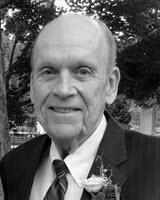
M.D. Smith, of Huntsville, AL, has written 150 nonfiction pieces for Old Huntsville Magazine and over 300 short fiction stories. He has published three romance novels and three flash fiction collections. https://mdsmithiv.com/