Singapore Dawn
SINGAPORE (MPI) — The air conditioning in my hostel room fails around three in the morning, leaving behind a thick heat that makes sleep impossible. By four, I give up trying. I lace my shoes and walk out into the dark, heading south toward the coast, hoping the ocean might offer a breeze. I walk through the empty, sterile streets until the city finally gives way to the trees of East Coast Park.
The humidity in these early hours feels like an extra layer of wet clothing you cannot take off. Out on the strait, the lights of the cargo ships are perfectly still, red and white dots pinned against the black sky, waiting for their turn at the docks.
I lean against a damp concrete barrier, my shirt already translucent with sweat feeling completely untethered. From the shoreline, the ships look like a floating city of commerce anchored just out of reach. I feel like a ghost who has wandered backstage before the theater doors open, watching a city that has not yet put on its corporate mask.
The sound starts before the light. It is a sharp, jagged crowing that does not belong to a city of concrete and glass, but here on the strip of sand between the parkway and the sea, it repeats every few minutes. It is the roosters. First one and then many of the lean, copper-feathered birds trot satisfied between the shore-sleepers who spend each night here, soaking in the gentle breeze.
A man in a faded blue polo shirt sits up on a stone bench. His movements are slow, heavy with the specific fatigue of someone who works with his hands. He does not look at the water. He reaches for a plastic bag at his feet, pulls out a small towel, and walks toward the public restroom. The roosters part respectfully for him while they peck.
My own face is gritty with salt and exhaustion, so I follow at a distance, driven by the simple need for cold water.
In the public shower, the water is free and cold. The sound of it hitting the concrete floor blends with the distant hum of the East Coast Parkway, where the first airport buses are already moving. Two other men stand by the sinks, their faces shiny with soap. They talk in low, clipped murmurs in a language I do not understand; their voices are energetic and brisk even though the sun has not yet cleared the horizon.
I catch the eye of one of the men in the mirror as I splash water onto my face. He pauses his razor for a fraction of a second… a brief, silent acknowledgment of my presence before returning to his reflection.
These are the faces that are invisible by noon…the ones who clip the precision hedges along the expressways, sweep the pristine food centers, and wash the glass facades of downtown towers. Here, in the grey light, they simply occupy the morning space that belongs to them. I step back outside. The sky above the sea lightens.
I sit on a low concrete retaining wall twenty feet away from the path, trying to blend into the shadows of the trees and foliage behind me.
A family of three arrives at the pavilion nearest the sand. They are not tourists; they move with the quiet efficiency of people who know exactly how many steps it takes to get from the bus stop to the shore. The father’s hands are calloused, the fingernails stained with a dark grease that soap cannot remove. The daughter, maybe nine years old, carries a plastic container of economic bee hoon, the scent of fried soy sauce and cheap oil cutting through the salt air.
The smell makes my stomach rumble. It is the definitive aroma of a Singapore morning, savory and heavy, a stark contrast to the sterile, air-conditioned malls I walked through the day before.
The mother carries a large, zippered canvas tote bag. She sets it down on the grass softly. When she pulls the zipper back, the sound is loud in the morning quiet. She reaches inside. Her hands disappear into the dark fabric and emerge holding a heavy, fat white chicken. It does not struggle. She sets it gently on the grass, then reaches in again for a second one, identical to the first. Unlike the wild roosters that stalk the margins of the trees, these birds are thick-bodied and slow. They do not run. They shake their feathers once, a soft rustling sound, and begin to peck at the roots of the grass near the family’s feet. The daughter drops a stray strand of noodle; one of the white chickens swallows it whole.
I watch them, utterly transfixed, wondering if the sleep deprivation is making me hallucinate. But the scene is entirely real. They have brought their living room, their livestock, and their breakfast out to the edge of the ocean. I realize I am witnessing a stolen hour of normalcy. Before the rules of this hyper-curated city-state take effect for the day, they are just a family having breakfast with their pets.
Nobody speaks. The family eats from their paper packets with plastic forks. The father smokes a cigarette, holding it between his thumb and forefinger, cupping the ember against the sea breeze. The two domestic birds wander no further than three meters from the bench, a small, artificial radius of home established on public land.
By six, the sky is a pale, unyielding blue. The first jogger passes, wearing bright neon shoes and wireless headphones, eyes fixed straight ahead. He breezes past the family, and past me, entirely encased in his own world.
The family does not look up. The mother reaches down, picks up the heavy white birds one by one, and places them back into the dark interior of the canvas bag. The zipper closes with a short, metallic snip. They pack their things and walk back toward the parkway, disappearing into the waking city.
I stay on my concrete perch for a long time after they leave, watching the transition. By mid-morning, the heat will erase this scene, leaving only the clean, postcard-perfect city that the world expects to see. But for now, the damp sand is still covered in footprints that the incoming tide is slow to wash away. I finally stand up, my own shoes leaving a track beside theirs, carrying the quiet secret of the dawn back into the concrete grid.


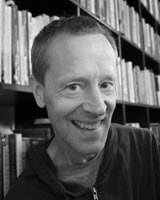
Zary Fekete grew up in Hungary and currently lives in Tokyo. He has a debut novella (Words on the Page) out with DarkWinter Lit Press and a short story collection (The Written Path: A Journey Through Sobriety and Scripture) out with Creative Texts. He enjoys books, podcasts, and many many many films.